
Communicating Impact vs. Activating It: What the Best Nonprofit Videos Actually Do
Nonprofit Impact Video: How to Activate Donor Empathy
Most fundraising videos describe what an organization does.
The best ones make you feel it.
That distinction sounds simple. But it is the difference between a nonprofit impact video that gets polite appreciation and one that moves a room to give more than they planned. Between a donor who nods and moves on, and one who pulls out their phone before the credits finish.
After years of producing fundraising video production work for nonprofits, healthcare foundations, and mission-driven organizations across Palm Beach and South Florida, what we have learned is this: communicating impact and activating it are two completely different things. And most organizations are only doing one of them.
Why Describing Impact Is Not Enough
Nonprofits are built on evidence. Data, outcomes, metrics, reach. And all of that matters. It builds credibility. It satisfies a board. It answers the logical questions a major donor might ask before writing a check.
But here is what it cannot do: make someone care.
Caring is not a rational response. It is a neurological one. Understanding why donors give requires understanding what happens in the brain when a person witnesses genuine human transformation. Neuroscience researcher Paul Zak has spent his career studying exactly this. What he found is that it triggers oxytocin production, a physiological shift that generates empathy and a desire to act. We stop being passive observers. We become invested participants.
No outcome report produces that response. No infographic. A real human being's real experience does.
This is the foundation of effective impact storytelling for nonprofits: not describing the work, but putting your audience inside the experience of someone whose life changed because of it.

Jahred telling us his story and his hopes for the future
The Difference Between Informing and Connecting
When we begin a nonprofit video strategy with a new client, one of the first questions we ask is: what do you want someone to feel when they finish watching?
Not what do you want them to know. Not what do you want them to remember.
Feel.
That question changes everything. It shifts the camera away from the institution and toward the individual whose life has genuinely changed because of its work. And that individual, their voice, their face, their specific experience, is what creates the emotional fundraising appeal that causes someone to give.
We call this the difference between going intimate and going expansive.
Intimate: one person, one family, one moment of real transformation that makes the mission tangible and human.
Expansive: the reach, the data, the systemic change that shows a donor their support is part of something larger than one story.
The intimate creates the caring. The expansive gives it somewhere to go. Both are necessary. The intimate has to come first.
This is what separates donor engagement video that moves people from donor engagement video that simply informs them.
What This Looks Like in Practice
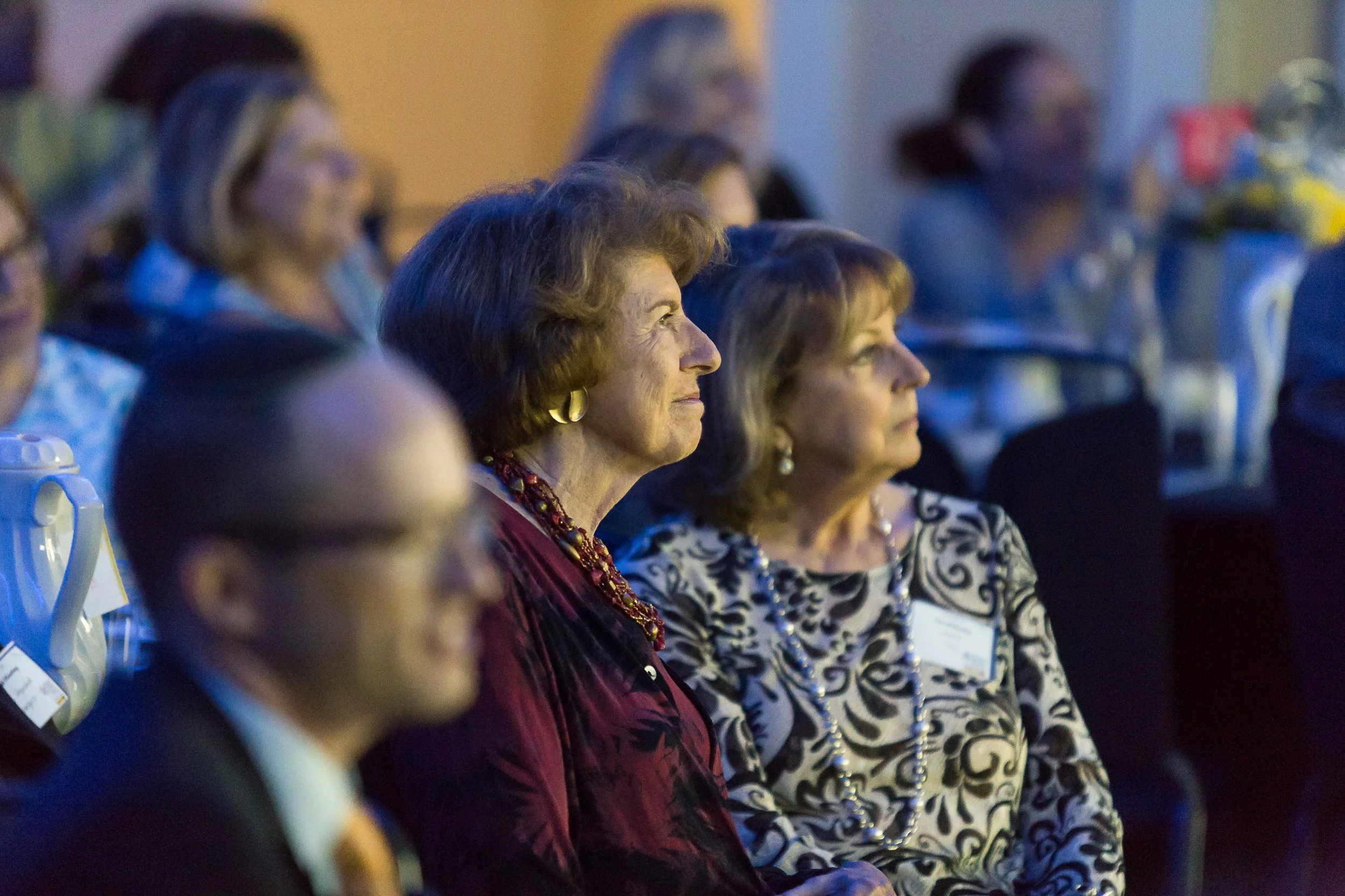
At the Connections Educational Center Hearts and Hands Gala, we showed the story of Jahred, a graduate of the school who had plans to earn his food service license and become a chef. Getting there required the kind of individualized support that Connections was built to provide.
The room raised $500,000 that night. But the moment that stays with us is a banquet server, someone who came to work that evening, not to give, who was so moved he stopped and donated during the paddle raise.
That is empathy activation. A real person's genuine experience of transformation reached an audience ready to feel it. The response was not calculated. It was human.
We have seen the same thing happen with impact video for healthcare nonprofits and children's mental health organizations across our region. In every case, the video that moves people puts the audience inside a real human experience rather than describing the work from the outside.

a funny moment during an interview with Gigi
How to Know If Your Video Is Communicating or Activating
Ask yourself this: does your current nonprofit impact video lead with your organization, or with a person?
Does it show what your work has made possible for a specific human being, or does it describe what you do in general terms?
If the answer skews toward description, you are communicating. That is not nothing. But you are leaving the most powerful tool in fundraising video untouched.
Knowing how to make a fundraising video that actually raises money comes down to one thing: finding the story that lives at the intersection of your mission, your values, and a real person whose life changed because of your work. Everything else follows from there.
Where Video Production for Mission-Driven Organizations Begins
Before any project begins at Argonaut Productions, we run a Big Picture Roadmapping session with every client. It is a structured discovery process — you can learn more about how we approach it on our Process page — that brings all the stakeholders together to surface the stories, values, and moments of genuine transformation that live inside an organization.
That session is where the shift happens. From communicating to activating. From describing to connecting.
If you want to understand the full thinking behind our impact storytelling approach, that is also worth a look before we talk.
If your organization is ready to make that shift, we would love to explore what that looks like. The people you serve have stories your donors have not yet had the chance to feel.
Jason Rogers is Principal and Creative Director of Argonaut Productions, a video production company for mission-driven organizations based in Palm Beach Gardens, Florida. Argonaut specializes in nonprofit impact video, fundraising video production, and donor engagement video for nonprofits and healthcare foundations.